Sitemap Next: New York
New York, Travel Guides
 USA overview
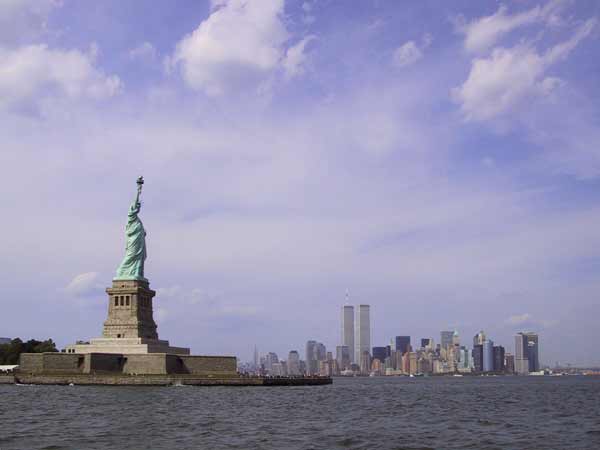
On this page, you find information about travel guides about New York.
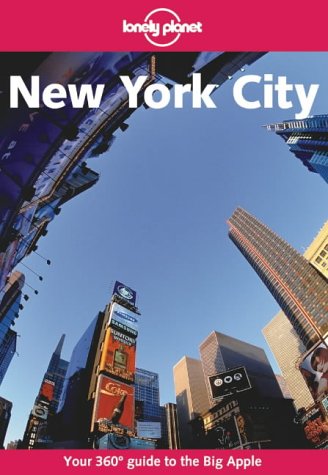
I took three guides with me, the Lonely Planet, the Moon Guide and the Rough Guide.
The three guides that I took with me compare as follows:
The Lonely Planet offers attractive illustrations, which is always a pro before you go.
The Moon Guide is able to really give you an idea about the atmosphere that you will encounter in the different neighbourhoods, and shows you special places.
The Rough Guide has most information (almost 500 densely printed pages).
As an illustration of the style of the three guides, here is the description of the hotel that we chose:
The Gramercy Park Hotel at the corner of E 21st Street and Lexington Avenue, advertises itself as a 1st class place, and though the location overlooking Gramercy Park is perfetc, it's a bit dowdy and the service tends to be slow and inattentive. The place does have a wondefully dark lobby bar that's worth checking out if you're merely passing by.
The Gramercy Park hotel, 2 Lexington Avenue at 21st Street, may be more than a bit worn, but it still has a gracious old-New York feel. The rooms are large and airy, and downstairs reins a '50s-era cocktail lounge that attracts all ages. The hotel is favourite among publishing types and rock musicians.
Gramercy Park, 2 Lexington Avenue. Pleasant enough hotel located next to the only private park in the city (residents get a key to the gate) and popular with Europeans. There are smoking and non-smoking rooms (you really know when you're in one of the former) and a mixture of newly renovated and tatty rooms.
I took several guides with me to New York. The Lonely Planet guide is great to read before you go: it has photographs in colour throughout the book, which makes it easier to imagine where you will go beforehand.
History, politics and government, society, religion and language and so on, get about 20 pages. Facts for the visitor, getting there and getting around is explained in about 40 pages.
There are about 85 pages covering things to see and do in Manhattan (including about 15 pages on the Bronx, Brooklyn, Queens and Staten Island).
Ten pages are dedicated to places to stay; places to eat are described in more then 20 pages.
The rest of the book is about entertainment, shopping, some suggestions for excursions, and a map section with subway lines, and the places to stay and eat.
This Lonely Planet Guide gives much information within these pages, with nice illustrations.
The place of the information about places to stay and eat, apart from the information about different neighbourhoods, makes it easy to do research when you are home, before you go, but it is less easy to get a "feeling" for those neighbourhoods that way.
The guide is available at Amazon .
Every Moon handbook that I get my hands on has the same result: "Yes, this is what I want to knwo". This Moon handbook of New York City is no exception.
Manhattan is covered neighbourhood for neighbourhood, including places to stay and eat, and shopping details. Such an approach has the advantage that you get a feeling for the different neighbourhoods very easily.
In this case, the writings in the book also help: it's full of colourfull details about the neighbourhoods, "small facts". The book also points out places that are less obvious than what is found in every guidebook.
It is my favourite guidebook.
To get a sense of the writing, here are the first sentences of the book:
New York is a city people love to hate. It's dirty, it's dangerous, it's crass, and it's loud. It's cynical, corrupt, cold, and uncomfortable.
Worst of all, say out-of-towners, there's something un-American about it. All that pushiness, all that traffic, all those people actually choosing to
live in ugly appartment buildings with no green front lawns or white picket fences in sight.
This can't be the American Dream, or the United States as our forefathers meant it to be. No - New York may be a fine place to visit, but it's no place
to live.
New Yorkers don't diagree. In fact, they'll enthousiastically endorse any negative a visitor comes up with, and add a few of their own. New York's
transportation system sucks, its taxes are too high, its real estate prices are exorbitant and poverty is rampant. The school system is falling apart,
the middle class is being forced out, the job market is impossible, and everyone is out only for himself.
No, New Yorkers sigh, wearily shaking their heads. New York is no place to live...
But then again - they arch their eyebrows - it is the only place to live.
The guide is available at Amazon .
The Rough guide offers almost 500 pages of text, including some maps.
The book is organised in the same fashion as the Lonely Planet, starting woth the "basics", then giving descriptions of the different neighbourhoods, with chapters on accomodation and food at the end of the book.
Comparing to the other books, the Rough Guide offers more detailed information than the others, but without the attractive illustrations of the Lonely Planet, and without the atmosphere and the special information of the Moon Guide.
The guide is available at Amazon .


 Onderschrift
Conditions for the use of a photograph.
the Copyright page.
Onderschrift
Conditions for the use of a photograph.
the Copyright page. Code voor foto: